The Conversation
Prodigy Protester from Patna

It would not be an exaggeration to say that in the last week of August, 2026, I, along with millions of other Indians, was spellbound. Watching a 6-year-old boy from Patna speak directly to the cameras of mainstream and social media reporters without pause or hesitation, without once stopping the flow of his answers to their questions by looking around for adults to guide him, I felt a mixture of emotions.
Being completely astounded by the fluency of Aditya Kumar’s speech was certainly the beginning, but every video of his that I watched brought new feelings – from a fierce desire to protect him, to a great gratitude that a person like him had emerged to tell us what we needed to hear.
He was first noticed on the 25th of August, when, holding a placard and the Indian flag, he had climbed atop a bus during the BPSC-TRE protests by teaching job aspirants who were asking for transparency, timely schedules, and policy changes in the Bihar Public Service Commission's Teacher Recruitment Examinations (TRE). With delays in the notification and scheduling of exams, negative marking, restrictions on applicant categories and difficulties with domicile policies, qualified job aspirants had a long list of problems that demanded immediate attention from the government. Aditya Kumar, who had accompanied his parents Jeetendra Kumar and Munni Kumari to the protest, highlighted this with his placard and his vantage position on the bus.
He was brought down, and, eager to show their might and control of the situation, the small, thin, diminutive boy was led away, none too gently, by a woman police officer. These videos, that went viral within minutes, brought intense focus on Aditya, who was seen crying in some of them. When asked why he was crying, he said, it was because he had seen one of the protester’s head being hit so hard that it broke his skull.
“What kind of government is this that does not know how to talk to students, but knows how to break their heads?” asked Aditya. When he was next spotted, and had been reunited with his parents, he had a lot to say.
“I was separated from my parents for 8 hours, and they were beaten and threatened by an IPS and SP. Imagine! Why were they beaten, when they are not criminals and had done no wrong, not even thrown a stone or harmed anyone? If such senior officers themselves raise their hands to hit people, whom can we turn to, to complain about any wrongs?” he asked. “How did my mother get this mark on her cheek, and her arm? Who gave such directions to the police? I will complain to the PM about the CM Samrat Chaudhary, under whom these officers have done such acts.”
Over the next few days, dozens of reporters of small YouTube channels (and the egregious TimesNow) followed Aditya Kumar and he replied to their questions with no hesitation, always accompanied by the unswerving gaze of his wide eyes, and the voice of a small child still in Class 1. He protested the treatment that had been meted out to his parents by the police, by sitting in protest at Gardanibagh, Patna. Before he began his protest, he garlanded both Mahatma Gandhi and Babasaheb Ambedkar’s statues, and finally sat down to protest with his own neck garlanded in large marigolds. While he spent one night in the open for this protest, he was persuaded to end his demonstration by independent MP from Purnia, Pappu Yadav. He explained this by saying, “He has always helped us, and got me my admission to school, so I had to listen to him.” If not for the MP’s intervention, Aditya had been insisting that he would sit in protest till PM Modi came to meet him, and action was taken against the police officers responsible for hitting his parents.
Some really notable moments from Aditya speak in those few days from August 25 to 31 were:
“No, I was not beaten when the police had taken me and separated me from my parents for 8 hours. At first, the officer whom I was taken to offered me a Rs. 1 ‘chaaklet.’ I refused to take it, and asked him, ‘How do you expect me to eat chaaklet when my parents have been detained?’ Then he ate it himself.”
“I don’t think Samrat Chaudhary is a good CM and I will complain against him. He did not say anything to stop the planned construction of a temple for PM Modi that will cost Rs. 112 crores. How can such a temple be built? It is better that the money should be used to build schools and hospitals. And PM Modi can never be compared to Prabhu Sri Ram. Just think, if, when he was coming to become PM, his father had stopped him and said, ‘You have to go into exile for 14 years,’ could he have done it? Never, he should not be made into a god like Ram.”
If you are feeling astounded, reading this, it is just a fraction of what many of us felt, watching the videos.
When he was asked if he would like to become a police officer when he grows up, he said, “No.” Then, when pressed for a reason, he said, “Because you come under pressure from politicians to do bad things like break protester’s heads.” What would he like to be instead, he was asked? “I will become a lawyer like my guru, Shivanandan Bharti, who is an advocate,” he said.
The most notable thing that emerged during all these recordings was, a small child speaking directly to cameras, with a dozen or more mikes clipped to his collar and chest, and the adults in his life – his parents, and his Advocate guru, sitting respectfully behind him, looking serious, and not attempting to prompt him or push him in any way.
When a reporter asked, “Some people are saying that you are being coached to say all these things. What do you have to say about that?” Aditya leaned forward kindly towards the questioner and said, “Ask anything you want. Please ask.”
Other journalists also attempted to show him the futility of his actions. “How will the PM come to meet you? The PM is very busy,” one said. “Well, as a PM who makes the people listen to his Mann ki Baat, the PM also needs to listen to what poor people have to say.”
“But what if he doesn’t?” insisted the reporters.
“Well then, he should at least declare by a single tweet that I don’t have the time or inclination to listen to poor people of my country,” said Aditya, raising a cheer and laughs from all present.
He was told that he should be studying, not demonstrating. The answer was simple – “Padhai aur ladaai, saath saath karenge.” (Studying, and fighting, I am doing them side by side.)
His idols are obvious. When he was reminded that he is too small to make a difference to the government either at the state or the centre, he cited Dasharath Majhi. “Just as one man made a mountain bend to his will, I will uproot (ukhaad) the government, if necessary,” he said. Finally, he advised people around him to come out of their homes and do whatever was necessary to say farewell to an unjust and corrupt regime.
That is the most amazing part of Aditya Kumar’s story.
In a society where TV channels have relentlessly spewed hate and division, and justified one administrative atrocity after another:
How did such a small child develop such a clear conception of justice, and a desire to speak up against injustice? He said he learnt about all current events and circumstances by watching the news!
How can we, as a society, continue to ignore the enormous harm we have done to our future and our children by normalizing evil, cruelty and corruption in our midst?
Each word uttered by Aditya Kumar should leave a searing scar on our collective conscience…if such a thing still exists.
Comments
explore more
The Conversation

The Mundane as Miracle
When one has been denied of so many things that brought joy in the past, there is still comfort to be had, and it comes from an unexpected direction...
The Conversation

Resist, Reboot, Reset, While You Still Can
Every so often, an opportunity arrives, for us to take ourselves less seriously, laugh out loud, and yes, look a little more seriously at what our life is all about…
The Conversation

The Importance of Being Gen Alpha
What are school students talking and thinking about? I was given the chance to find out some of their ideas and concerns
The Conversation
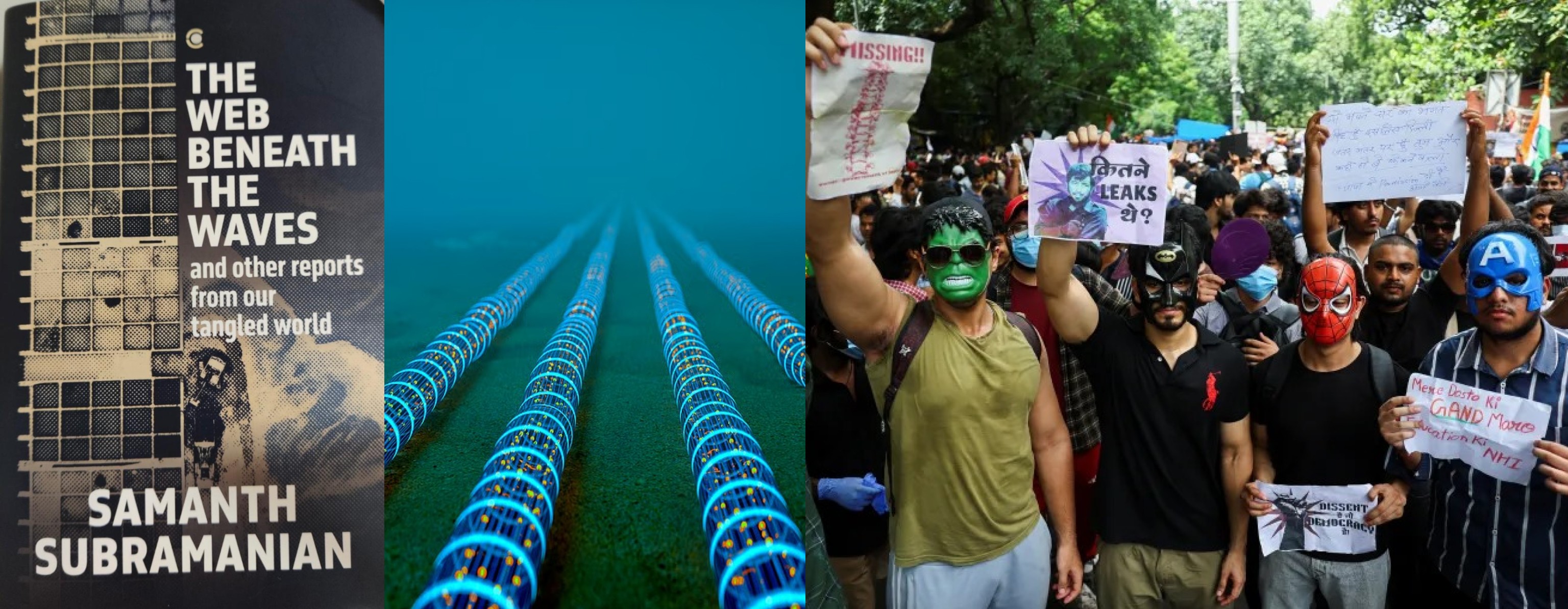
Interconnectedness and the Internet
The world wide web has drawn us closer, if we are to go by recent experience. Yet, fearmongers are already giving a ‘nationalist’ hue to certain debates.
The Conversation

Big Screen Reunion
A long hiatus ended with a fresh new film in theatres, giving me the opportunity to indulge once again.
The Conversation

What Women Want
Hint: Money, Value, Autonomy…
Comments