Roasted meat and women
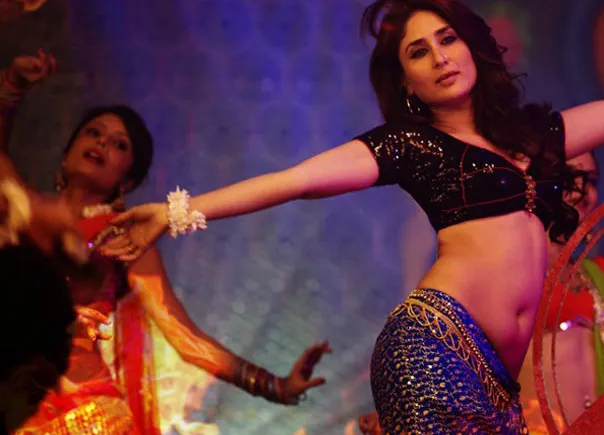
In that awful season that led up to the Nirbhaya rape case of Delhi in December 2012, Kareena Kapoor came on stage with host Salman Khan in season 6 of Bigg Boss to promote her item number in Dabanng 2. Apart from the expected coy repartee between her and Salman, there was a bit where Salman, showing the unholy glee he exhibits from time to time in teasing his guests, made her dance a few steps to the line ‘Main to tandoori murgi hoon yaar, gatak le sainya alcohol se’ from the song ‘Fevicol’.
For those unused to the nuances of Hindi, the above is a raunchy invitation by Kareena in the dance number to her male accompanists (or single, unspecified male lover) to consume her by likening herself to a roasted chicken. ‘I’m a tandoori chicken,’ she beckons. ‘Wash me down with a swig of alcohol.’
On the night of December 16, 2012, five men who had been consuming roast chicken and alcohol decided to cruise in search of live game and found Nirbhaya. The rest has been told too many times to bear repeating here. But the rape that shocked the nation, catalysed the framing of new anti-rape legislation, and became the new benchmark of absolute horror and bestiality against women drew no words of regret from Bollywood icons. Shock, yes. Horror, yes, that too. But regret, as in ‘I/we are sorry if any of the films/songs/characters we have created have led to a culture of rape’ – none, absolutely nothing.
Bhawana Somaaya, Jigna Kothari and Supriya Madangarli’s book ‘Mother Maiden Mistress Women in Hindi Cinema, 1950-2010’ is a very good study of the way women have been portrayed in Hindi cinema from the days that followed Independence to the present era. Looking at leading ladies and characters through the prism of enduring Indian stereotypes like Surpanakha and Savitri, and connecting the depictions of women to the social and political conditions of the time, this book is enlivened by first hand accounts from Shabana Azmi and Rani Mukherji, Hema Malini and Madhuri Dixit, among others. For viewers who have been watching films for decades, the book brings insights into how popular culture has reflected society and vice versa.
Ending with references to films made between 2010-2012, Somaaya, Kothari and Madangarli find some complexity emerging in women characters in films like ‘No One Killed Jessica’, ‘Saheb, Biwi aur Gangster’ and ‘7 Khoon Maaf’ even as they note about the item numbers in the films of today:
“What is different about the yesteryear cabaret number and today’s item number? Both are, in a way, exercises in voyeurism but the present day item numbers are deliberately set in explicitly male company…each one has the actress surrounded by men, marking the woman’s body with their proprietorial gaze, with the words of the song emphasizing the offer of the body for visual pleasure not only to the men around her, but to those in the audience too. Mainstream films today, and the women in them seem, more than ever, a consumer product.”
(Mother Maiden Mistress Pg. 240-241, Harper Collins India, 2012)
Well, in the Fevicol song the female body is not offered up only for visual pleasure, but also as an edible object of consumption fed by alcohol-fueled desire.
Since this song appeared on screen, and reflecting the pro-woman mood in the country following repeated acts of rape, we have had films like ‘Mardaani’, ‘Mary Kom’, and the irrepressible ‘Queen’ present women protagonists without being packaged for voyeurs. But does this absolve the creators and actors of many regressive and socially irresponsible films from displaying any sign of a conscience?
In Hollywood, it is possible for an actor like Bruce Willis to show a die hard commitment to Republicanism, for Angelina Jolie to speak of being emotionally drained after ‘Maleficent’ or for Lindsay Lohan’s many attempts at rehab being public knowledge. Actors and actresses are seen as human and fallible and can express views that reveal they are sensible of a greater social responsibility. In our country, the only time film icons come out in favour of the girl child, or saving the tiger, or a cleanliness campaign, is when they are being paid handsome endorsement fees.
Is it too much to expect the leading lights of Hindi cinema to ever reveal any sense of responsibility about the images and characters they craft for public consumption? Sadly, it seems so.