Fawad Khan and Mission 44+
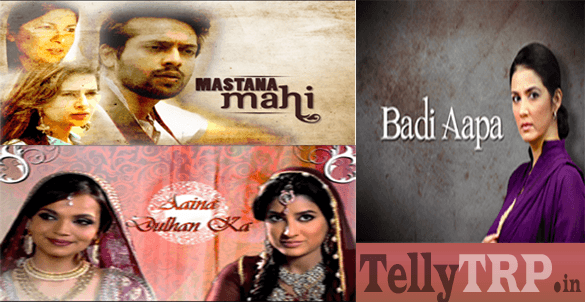
Having never followed a single daily programme on TV (yes, even Hum Log and Buniyaad) and restricted my TV loyalty to Big Bang Theory and Bigg Boss Season 4, I was completely unaffected by the launch of the new Zindagi channel with the tag line ‘Jodey Dilon Ko’ – an obvious reference to the fact that it was an Indian channel with almost exclusively Pakistani content. Like TOI’s Aman ki Asha, this development did not have me whooping with joy on the streets.
Which is why it was easy to make a favourable first impression on me when I caught bits of a tele-film starring Fawad Khan on the Zindagi channel at a friend’s place a while back.
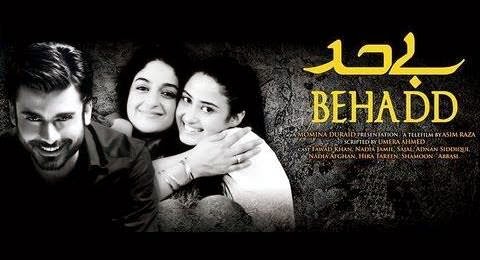
Based on a novel by Umera Ahmed, ‘Behadd’ tells the story of a man who falls in love with a friend – a widow with a teenaged daughter. Altogether different from the blaringly told stories made on this side of the border, the film seemed quite sensitive and well-made, even reminding me of some real-life situations I had encountered. Although I refused to succumb entirely to the charms of Zindagi, doing some determined texting on my phone to show my friends that I was elsewhere, I figured that day that it wasn’t a bad thing Indian audiences were getting to see shows that had a lot more restraint in the acting and situations, a lot more reality in the setting and props, and dialogue with lines it was a pleasure to hear.
Today my mother came over to spend the day with me, after ages, and I decided to introduce her to the merits of Zindagi. Lunch time programming was unlikely to be as riveting as my last glimpse, I knew, so wasn’t expecting Fawad Khan. But I was unprepared for the common threads that ran through the different serials. So many of the stories are about contrasting sisters – the good one who is grounded and sensible, and the one who is into money and possessions. This comes out in terms of contrasting co-wives as well, with similar characteristics. All of them, sisters, or co-wives, are still pandering to the man, hankering for his appreciation and recognition. The central concerns remain who will get married to whom – and there is an inordinate amount of stress on widowed mothers trying their best to give their daughters into marriage, so that their responsibility is concluded. Besides the issue of consanguineous marriage, arranged by their mothers between cousins, the stories bring up the sticky issue of a man marrying another wife because the first one hasn’t borne children. I saw two or three stories through lunch and it began to seem most unpalatable after the first half an hour in which I was appreciating costume and make-up, interiors and casting. Aside from these undeniable factors of superiority compared to serials out of Mumbai, the fare seemed to be pure and undilutedly patriarchal. It was ‘kheer’ all right, but ‘purush satta vadi kheer’.
I might still have risen undisturbed, with the contents of my lunch on their way to being digested, if it wasn’t for the advertisements broadcast at each break of the programmes. All these featured Narendra Modi and Amit Shah against a saffron background with the lotus symbol alongside, after a Kashmiri had just bemoaned the state of things inside Kashmir, and promised to change things this time around. This time we will be on Modi’s side and press the button against the lotus in the coming elections, promised an unemployed youth, a senior citizen, a housewife, all with Kashmiri accents and faces.
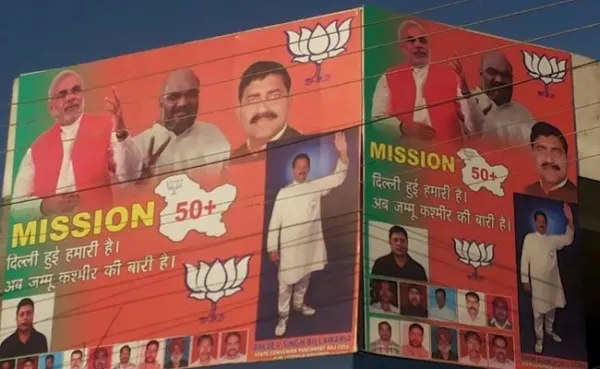
So as far as I could see, Pakistani programming had committed itself 100% to ensuring a BJP victory in J&K. Zindagi channel, apart from the paeans it was singing to patriarchy, was also exclusively promoting the political agenda of the NaMo-Amit Shah Mission 44+
If there is any other party advertising on this channel, at least I did not see it today. No wonder I began to feel quite ill by 3 pm.