A Voice for the Innocent
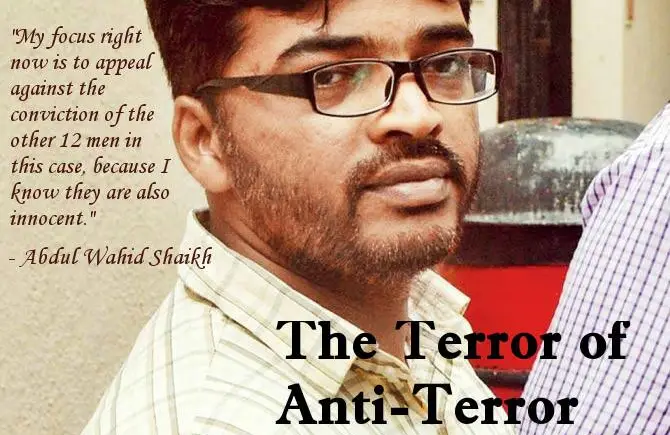
Since his acquittal in the Mumbai train blasts case of July 2006, as the sole accused to be let off by the courts, Abdul Wahid Shaikh
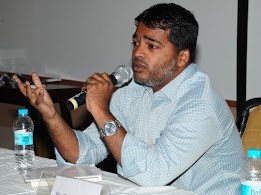
Abdul Wahid Shaikh
has worked to highlight not only his own innocence, but that of the 12 co-accused he had in the case. Author of the book ‘Begunah Qaidi: Aatankvaad Ke Jhoothe Muqaddamon Mein Phansaye Gaye Muslim Naujawanon Ki Dastaan’ meaning Innocent Prisoner: Stories of Young Muslims Who Have Been Framed In False Cases of Terrorism (Pharos Media ,2017) which is presently available in Urdu and Hindi with an English edition to be launched soon, Abdul Wahid travels to different locations in India to speak about his experiences. He has been gathering support from many former and serving bureaucrats, activists, intellectuals and concerned citizens. He has set up the Indian chapter of the Innocence Network, an organization that works for the interests of those framed in false cases and tortured or imprisoned by the police and government. Set to tour several towns in Maharashtra with his book in September, 11 years after he was first picked up by the police, Abdul Wahid Shaikh spoke to Scharada Dubey.
Wherever you are described in the 7/11 Mumbai blasts case, it is a mere 2 line description – that you had harboured some Pakistanis at your house in Mumbra. How did this whole process start? When did the police first pick you up as a suspect?
This whole thing actually started in 2001, when SIMI (Students Islamic Movement of India) was banned by the government of India. At that time, many Muslim youths were picked up all over the country and questioned as supposed SIMI activists. A majority of them in fact didn’t have much to do with SIMI, but they were picked up all the same. In my area, the local police picked me up because there had been a dispute in the mosque in which I had been involved, and one man who had a problem with me then was a police informer. He told the police that I could be picked up during the SIMI raids and there would be no problem. I was picked up and regularly questioned by the police, a case was filed against me, then this case was closed, but I had come on the police radar because of it. That is why they picked me up whenever there were any bomb blasts, like in Ghatkopar in 2003, in Mulund, or whenever there were any communal riot like situations. They would pick me up, even beat me up, then let me off after some days.
So as a 20 or 22 year old youth, the role of the police had already become tainted in your eyes? From being protectors of society you had begun to perceive them as oppressors?
No, I didn’t really see them as oppressors, I still had faith that the police would catch us in small cases, question us and let us go after they found we were innocent, but would never frame us in big cases like terrorist bomb blasts. I thought that they were more interested in catching the real culprits in such cases. I would cooperate with them each time they picked me up, like in 2003. I went through the cycle of getting picked up, questioned, beaten, then released, believing that they were only doing their routine enquiries. This belief of mine was also shattered when they framed me in the July 2006 Mumbai train blasts.
The prosecution in the Mumbai blasts case narrated a well-organized plot between 13 co-conspirators. Were you all well known to each other in fact? What about Yasin Bhatkal’s claim when he was arrested in 2013 that the Mumbai blasts had been carried out by the Indian Mujahideen (IM) in revenge for the 2002 Gujarat riots? Did the police follow up on that claim?
The entire story narrated in court about the Mumbai train blasts is a work of fiction. In fact, apart from a few of us who are related to each other, we met each other during the police process only. For instance, Kamaal is from Bihar, and Majid is from Kolkata.
Not one of us had ever heard of them or
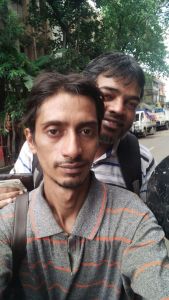
Author Abdul Wahid Shaikh standing behind Majid’s brother in law, Mohammed Aasim, at Kolkata.
met them. I knew Mohd. Sajid, because he is my brother in law. Faisal and Muzammil are brothers, so they knew each other. The rest of the accused were completely unknown to each other, and the ATS tried to make out that we had known each other for years, were great friends and so on. As for Yasin Bhatkal’s claim, it is there in his confessional statement, as well as in a statement by Sadiq Asrar Shaikh, that the blasts were the work of the Indian Mujahideen. But not only did the police not follow up on this, they also dismissed it as an attempt by Yasin Bhatkal to shield us, as fellow terrorists. They claimed that he was doing this in accordance with the Al-Qaeda manual, but have never been able to produce the manual, or even tell us in what language it is written, and how we could have accessed it. These were just statements they made to discredit us before the court and the media.
You have spent 9 precious years of your life behind bars and faced the most severe torture for a crime you did not commit. How has this shaped your opinion as a citizen? What do you feel about your country and its administration?
Well, that idea that we grow up with, that the police are there to maintain law and order, to protect us citizens, that has been destroyed for me forever. During my time in jail, some of the policemen used to actually tell us: we know you are innocent, but we couldn’t find the original culprits, that is why you have to be in jail for this. That is shattering to hear – that they will knowingly keep innocents in jail just to keep up the illusion of taking some action. Now whatever be their motivation for this – whether it is for promotions, to keep their political bosses happy, to get awards, that is of no consequence. The fact is that by allowing such things to happen, the government or administration is also failing in its duty to protect its own citizens. If innocents are jailed and the real perpetrators are allowed to roam free, can we expect to end terror incidents and blasts? Look at our case – we were jailed in 2006, but the next few years, from 2007 to 2009 was in fact a period of many more blasts. Could these have happened if the original bomb blast planners had been caught and jailed? In fact, I think the responsibility of the blasts that happened in this period should be put squarely at the door of the ATS and the government. The whole process is also compromised by the double standards of investigators and courts. Look at the recently awarded bail to Pragya Thakur or Col. Purohit, against whom there is real evidence of planning and supporting terror. Compare it with the attitude of the government in appealing against the acquittal of the Muslim youths who were accused in the Malegaon blasts. Can such double standards really help keep us safe?
Besides the question of public safety, I also feel that with so many precious years of my life spent in jail, the least the government can do when my innocence is established is to express regret. Compensation and rehabilitation are not even in the picture – just a small apology from the government for the torture I have suffered could go a long way. But even this is not forthcoming, because in our country, no one questions wrongful confinement by the police.
What are your memories of Shahid Azmi? Was he your defence lawyer during the case?
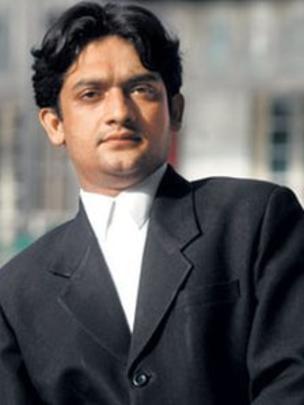
The late Shahid Azmi
Shahid Azmi was my defence lawyer, and also defended several others accused in the Mumbai train blasts. He was so supportive – learned in law, and extremely kind when he met us in court. He used to inspire confidence and urge us not to be afraid. It was he who saw the danger of MCOCA (Maharashtra Control of Organised Crime Act, 1999) and how it had been wrongfully applied in our case. In fact, he took the struggle against MCOCA to the Supreme Court, even enlisting the support of top lawyers. When he was killed it was a huge shock to us all. At the time, he must have had over 100 cases of the accused in the Mumbai blasts, Malegaon bomb blasts and Aurangabad arms haul case. In fact, we were sure that the IB (Intelligence Bureau) must have had him killed by giving a ‘supari’ (contract kill order) to Bharat Nepali and Santosh Shetty. After his death, the Supreme Court upheld MCOCA, and that was a further setback. Somehow, we had to arrange other lawyers and continue our struggle. But Shahid Azmi’s contribution is unforgettable.
Having suffered at the hands of the criminal justice system as a young Muslim, do you feel the need for a political party that best represents your interests?
As far as political parties are concerned, I consider them to be functioning as part of the same rotten and depressing system that we are struggling with. That is the first problem. The second is that every party has a high command, and no one is allowed to speak or question anything that goes against the party line defined by this high command. As for representing the interests of Muslims, if political parties were really doing it, then shouldn’t so called secular parties like the Congress, NCP and Samajwadi Party have changed the lives of Muslims in all these years? Or what about Kashmir? The political parties there are led and run by Muslims, shouldn’t they have been able to solve the problem of Kashmiris? In my mind, parties that claim to speak for the cause of Muslims operate within the same limitations of the system as other parties. If I were to join one for the sake of my cause now, I would again face the unwritten rules laid down by a high command that would decide how and what I speak. I prefer to raise an independent voice and have been doing it for two years. I also feel that there are enough individuals and groups working in the area of human rights, both in India and abroad. I would rather work like them, than try to hitch my cause to a political party.
Several prominent personalities, including the outgoing Vice President, Hamid Ansari have recently spoken about the present majoritarian trend in the country making it uncomfortable for the minority communities. How do you view the visible hatred and bigotry? Do you see people returning to their senses any time soon?
The history of the world is full of examples of how the mightiest of rulers, even the most cruel and despotic ones, have finally had their downfall. This can give hope to anyone of us. Besides this, people tire of hate and will see a way out of it. It is not as if the seeds of hate are being planted anew. They were always being planted, but people were not able to act on this hatred because they did not see those inciting them forming the government, firmly established in power. Now that such people have power, they are flexing their muscles. Once they lose power, things will come back to normal. So I don’t feel as if all hope is lost, nor do I feel consumed by fear.
You did not allow the 9 years in jail to destroy your quest for learning. What were the courses you completed while in jail?
I completed my M.A in English, continued my LL.B, besides earning Diplomas in Journalism, Human Rights and Teaching. I had made a representation saying that prisoners should be allowed to study for free, and this was accepted, so that I could pass these courses from IGNOU (Indira Gandhi National Open University). I had always considered myself a good citizen, and I completed these courses because I thought they would help me to empower other citizens and do good work in society.
What was the thought that stayed uppermost in your mind during the years spent in jail?
The question of survival and the fear of becoming outdated in a rapidly changing world. 3G, 4G, Facebook, WhatsApp, all this was happening when I was inside. I worried about how I would support my family, whether my learning and knowledge would become outdated and stale. I worried about life passing me by.
(Read the book review of Abdul Wahid Shaikh’s book below)
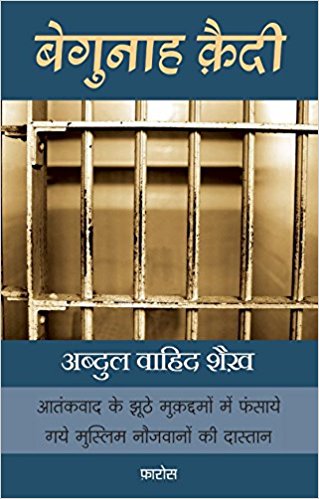
For Crimes They Did Not Commit
Begunaah Qaidi: Aatankvaad ke Jhoothe Muqaddamon mein Phansaye Gaye Muslim Naujawanon ki Dastaan by Abdul Wahid Shaikh (Hindi) pp460 Rs. 300/- Pharos Media & Publishing, 2017.
This book has made its way to a reading public, in spite of the repeated destruction of its preliminary pages when the author was in jail. It will soon be available in English, after its original publication in Urdu, and the Hindi translation. A carefully chronicled account of the way in which the Mumbai 7/11 train blasts case was fabricated by the ATS to frame 13 Muslim men, 12 of whom are still in jail, the book is a searing indictment of the Indian criminal justice system. In its factual and straight-forward narrative, the manner in which suspects are picked up at random, held without charge, tortured, threatened to remain silent or turn approvers, undergo narco-analysis tests which are open to manipulation and spend years in jail with no hope of release or redressal are starkly portrayed and leave little room for doubt.
Abdul Wahid has chosen to tell the story of each of the accused, beginning with their circumstances and background, and the painful reconstruction of their interaction with the police. What emerges is the picture of a motley crowd of young Muslims, mostly poor and struggling, picked at random and coerced and cajoled, threatened and tortured into ‘confession’ mode. In fact, as the voluminous charge sheet in the case begins to unravel in the pages of this book, one begins to seriously wonder: if the police had shown the same industriousness in actual investigation as they did in the rounding up of false witnesses and the fabrication of the case, would the outcome of the case have been totally different? This is particularly evident in the witness accounts of Amar Khan, testifying about going to the home of Shaikh Mohammed Ali Alam at Govandi and finding that 8 men were sitting inside a room, making bombs which crumbles spectacularly during interrogation, or in the initial claim by the police that 7 taxis were taken by the accused, along with their alleged Pakistani companions, from Bandra to Churchgate to plant the bombs in the local trains. Only 2 of the 7 taxi drivers were produced by the police in court, both of whose testimony did not stand up under examination.
Illustrious names from the police, some haloed by martyrdom, like the late Vijay Salaskar, lose their sheen in the long account of torture and brutality. It becomes difficult to glorify the role played by men like A N Roy and K P Raghuvanshi, when we read not just how the lives of the 13 accused have been altered forever by their being charged in this case, but also how a sensitive police officer like ACP Vinod Bhatt actually committed suicide after mentioning to Ehtesham Siddiqui, accused No. 4 in the case, that there was tremendous pressure on him by his higher ups to implicate the 13 men arrested even though he was convinced that they had nothing to do with the Mumbai train blasts.
As the book moves beyond the Mumbai train blasts case and outlines the bomb blasts that took place subsequently, like the German Bakery and Malegaon blasts, it becomes inescapably clear that being an ordinary Muslim is a very dangerous and vulnerable existence in India, and the danger increases manifold when you have neither wealth nor influence. At one point, the author has Inspector Khanolkar standing in front of him with folded hands on the first floor of the Bhoiwada lock-up, apologizing for having kept him in custody for over two months, even knowing that he is innocent. “I promise I will try and do something for you,” the policeman tells him. But how can a single individual make up for a system that seems to be based on religious profiling and discrimination?
As Abdul Wahid makes clear right at the beginning, he wrote the book so that others like him, who are detained on flimsy charges, can find the courage to report the officers who harass them, can file reports with the competent authorities about the way they are treated in jail, can refuse to sign on doctored ‘confessional statements’. The book remains his vehicle to continue the work of the Innocence Network, fighting for the release of his 12 co-accused in the Mumbai train blasts case, and all those who have been similarly framed in false cases. He could have just shrugged his shoulders and walked away free from the tortured memories of the 9 years he spent in prison. But this book reveals how he found his mission – to be a friend and guide for those whose only defence is their innocence.
Scharada Dubey