PubNext or PubNixed? 5 Things I Learnt in Goa
It has been nearly two years since I moved from being an author and free-lancer of many descriptions to becoming a publisher. Of course, I could claim a nodding acquaintance with publishing before this, from beginning my career with two well-established publishing firms in the early 80s. But since that time, I had been an author, producing books at regular intervals, and occasionally whining to my friends how my publishers had done ‘absolutely nothing’ to get me heaps of money and fame.
When I became Commissioning Editor with a start-up publishing company in Pune, I discovered the completely irrational and all-consuming nature of road rage. You know the feeling. When you are a pedestrian you walk relatively calmly, avoiding obstacles on the pavements and road, greeting a friend or neighbour now and then. But getting behind the wheel of a car suddenly makes you froth rabidly at the mouth against pesky pedestrians, lunatic two-wheeler riders, and those offensive SUVs whose owners just have to be ‘damned politicians’. So becoming an editor seemed to have suddenly made me aware of the generic self-centredness and pushiness of authors. I did have my polite mask on, of course, even though it threatened to slip every week, but my mind was often a seething cauldron of less than polite speculation about authors who thought publishers were supposed to be well-trained canines who jumped through hoops.
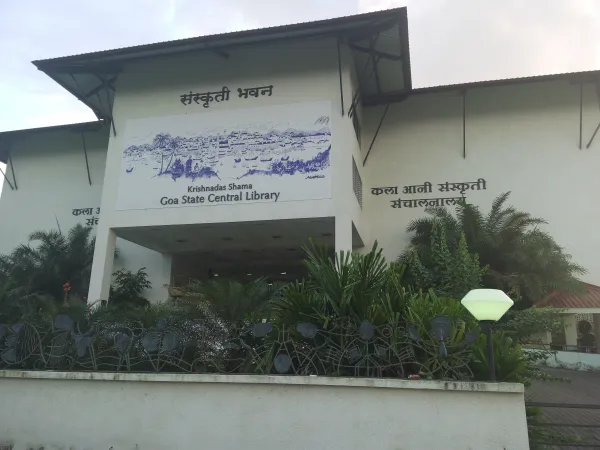
Which is why attending a publishing conference at Goa, an annual feature that goes by the name of Publishing Next, was absolutely essential for me. I needed to be reminded of the noble nature of my profession, just as a well-trained canine needs an annual vaccine to guard against rabies. Here’s what I learnt there:
The first lesson learnt was a fairly obvious one: humility. It was hard to keep one’s nose in the air when one was being reminded of the reality of how simple it had become for anyone to create content and put it out there in some form of ‘publishing’ these days. No longer must publishers have a benefactor complex about their being the single source of joy in an author’s or reader’s life. The average author could now choose between 8 traditional publishers and a similar number of self-publishing sites or platforms, while the average reader could decide that a classmate’s whatsapp updates or a neighbour’s Youtube upload were far more interesting than anything you had published in months.
The second lesson was about how ‘democracy’ meant different things to different people. While there were those who were bullish about the democratizing of both – the creation and consumption of content, there were others who were decidedly uneasy. One of the most heart-warming glimpses that emerged from statistics like how India is now a country of 900 million mobile users and how even construction workers have China made smartphones on which they view everything from folk music to films, was the idea that we are now returning to a culture of ‘orality’, one that pre-dated literacy. In fact, millions who remained outside the scope of literacy were now engaging with complex ideas and processes through the audio-visual messaging of smartphones. Wasn’t this great? The tremors in the room could be felt as people adjusted to this idea of ‘text’ and ‘literacy’ being replaced by newer forms of knowing. Of course, they had probably already faced the results of this in the way young people, or socially and economically disadvantaged ones, had begun to deal with them. But having it pointed out as an irreversible process, was unsettling for some.
A valuable lesson for those wanting to reach across the boundaries of regional languages and dialects was the need to experiment with various forms of distribution. Mobile phones came in the picture here as well, with a leading news and entertainment app maker offering a platform on which publishers could host their books and magazine content. It was also clear from the figures and trends discussed in more than one session, that the bigger volumes, the greater engagement with published content by those who received it, was going to be in the regional languages in coming years. English may represent the language of an elite ruling class today, but a great many bi-lingual users were going to choose their mother tongue over English in coming days, to explore news, entertainment, ideas and literature. This trend was already particularly pronounced among Tamil readers who spoke both English and Tamil.
The fourth lesson was about standards – of quality and decency, and even about self-censorship, or resisting any form of censorship. One phrase that emerged was that ‘Publishers can no longer be gate-keepers, they have become the pathway.’ Note from this that a pathway is trodden upon, it does not have the power to block your progress in any way. Every time a voice was raised about the need to preserve standards, and whether we were in danger of producing more and more shoddy work in the changed circumstances of today, another would respond with ‘Who is to be the judge of what is good?’. Because, as was pointed out time and again, even the crappiest of books were finding readers.
The final and most difficult lesson to swallow for me, perhaps because I am also an author, was that marketing capability has seemingly replaced any artistic merit or intent that an author possesses. If one were to go by the accounts of a leading retailer, several self-publishing promoters, articulate voices from traditional publishing houses, what makes a book a bestseller is the relentless marketing effort on the part of its author in partnership with the publishers. So whatever and however you write, you must know how to grab the eyeballs or the mere balls with your marketing. I wanted to burst into tears at the image of present and future generations of parents greeting their child’s ‘I want to be an author/writer!’ declaration with a pat on the head and a ‘Beta, you must do your MBA.’ Is this the greatest lesson or insight publishers can give us? I was cheered by at least one quiet and self-possessed voice –a publisher from the South, expressing disagreement.
I am back at home, in the twin roles of author-publisher. While a part of me is cringing from the chastising lessons of the past two days, another part of me is singing at the possibilities that have opened up. I leave you to figure out which part is doing what. As for you, you know what to do now – go, write, publish, market – now you can truly do it all.