Ayodhya, Ansari, Arnab and Aastha
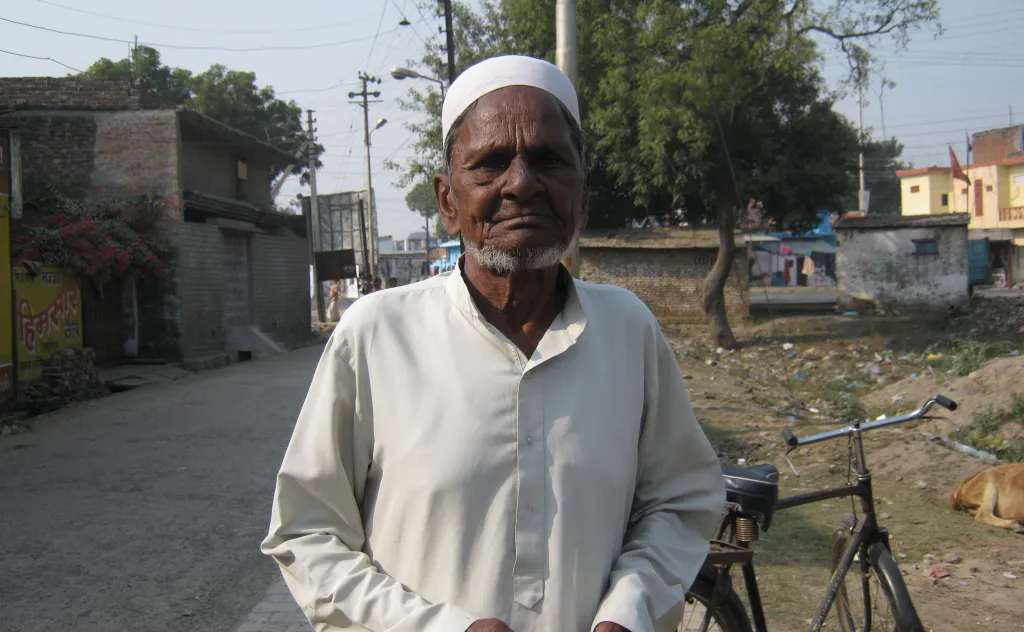
As I write this, Arnab Goswami has begun his daily show with a rant on why Hashim Ansari, who, today at 93 has declared his desire to withdraw himself from the Babri Masjid-Ram Janmabhoomi case, did not speak earlier in a similar way. What prevented him from coming forward for so many years? What has made him ask for an out of court settlement now? He goes on, with rising inflection, and asks why Hashim Ansari should change his position from the one he took in 1949.
The chorus of voices assembled for Arnab’s concert of babel tonight is just getting into its stride…
I cannot help remember Hashim Ansari as I last met him, exactly four years ago, in December 2010. His humility, his absolute accessibility to anyone who wanted to meet him, the extremely modest scale of his home and lifestyle – these are unforgettable, as is his undeniable popularity across Ayodhya. Today, this man speaks of his willingness for a dialogue to solve the Ayodhya dispute, and Arnab is treating this with extreme suspicion – has the present situation come about only because the BJP has completely wrung the Ayodhya issue dry, he is asking. Are they ready for dialogue and out-of-court settlement only because they are done with the political milking of Ayodhya?
Hashim Ansari always talked of dialogue, of the path of peace, of the need for people to listen to each other. This was evident in every conversation anyone had with him on this issue. All of Ayodhya has old-timers who recall Hashim Ansari and his legal opponent Paramhans Ramchandra Das being good friends who traveled to the Faizabad court together for the case for years. He has continued his case because there are richer and busier Muslims who were unable to spare 64 years of their lives to fight a case, whatever be the significance for their religion or community. However much Arnab is trying to establish that he has been used or influenced or pressurized into today’s statement, anyone who has met Hashim Ansari will know that he has wanted exactly this – an out of court settlement for years and years.
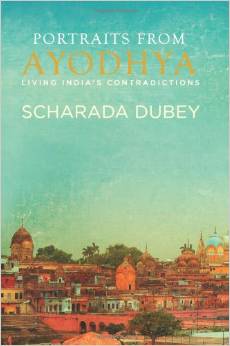
Whatever is made of Hashim Ansari’s statement, and the supporting statement of his friend and the head of the Hanuman Garhi temple of Ayodhya, Mahant Gyandas, (that this issue would have been solved earlier out of court if it wasn’t for the efforts of the likes of Vinay Katiyar and Ashok Singhal) what we also have to see is the many efforts that have been made behind the scenes for years, to arrive at some kind of a solution. For instance, after the September 2010 judgement of the Lucknow division of the Allahabad High Court, I have described how all the three main parties of the title suit and some prominent citizens of Ayodhya had met with Sanjay Dalmia to see if any way forward could be found. In the years from 1992 up to when I lived in Ayodhya till 2011, there was a monthly meeting that the DM used to have on a Sunday, when representatives of both the communities, prominent citizens, and the litigants, used to meet for ‘greeting, meeting, eating’ as Hari Dayal Mishra, profiled in Chapter 2 of my book Portraits from Ayodhya: Living India’s Contradictions, described it.http://www.amazon.in/Portraits-Ayodhya-Living-Inidas-Contradictions/dp/9381626219/ref=sr_1_2?ie=UTF8&qid=1417641215&sr=8-2&keywords=Portraits+from+Ayodhya+by+Scharada+dubey
After the September 2010 verdict, Justice Palok Basu led an initiative to find a solution by organizing regular meetings at Tulsi Smarak Bhavan. http://archive.indianexpress.com/news/through-meetings-retired-judge-leads-search-for-babri–solution-/1018363/
Over and above all this is the matter of the faith or ‘aastha’ of the people of Ayodhya themselves. Weary with being treated as sitting ducks for an orchestrated battle of faiths and communities, they have long ago rejected the VHP and the leaders who arrive with their cohorts to raise a few slogans in favour of Ram Lalla only to leave Ayodhya as bedraggled and bereft as before. Their faith in democracy is in danger of becoming even more feeble if some resolution to the issue is not found and the much-vaunted ‘vikas’, ‘achhe din’ and development not delivered to the people of Ayodhya.
Arnab is clever enough to read the irrelevance of the Ayodhya issue for the present dispensation, and therefore read this as their initiative. But perhaps there is something beyond cleverness and cynicism that may be coming through in today’s developments.
The innocence of Ansari, and the urgency implicit in the seething, silent, streets of Ayodhya.